How I Got a Software Engineering Job in 2026
A systematic look at how I prepared for senior engineer interviews after a 7-year gap, and what the first job search of my new chapter actually looked like - from the prep plan to the offer.
It's been quiet here. Partly because I've been outside the UK for a couple of weeks - and partly because yes, I did get a job offer. Over two weeks ago now!
I still won't pretend I know everything. But I can share my personal story: how I systematically approached interview prep, and what my first job search in 7 years actually looked like. If it's useful for one or two people, I'm more than happy.
Where I was starting from
If you've read my previous post, feel free to skip this part.
For everyone else: I've been on a career break for the last 10 months. I was made redundant and decided to make the best out of it. From the beginning of March, I started preparing for the job search and interview process.
I also decided to switch up my path a little. The full story is in this article, but the short version is: I'd been working as a tech lead, mostly managing the team and making bigger technical decisions. I wanted to come back to being more hands-on in my next role.
How I started
I'm a very organised person, so I started by properly investigating what I actually need in 2026 to get a senior software engineer role. I looked at job descriptions for roles I'd be interested in, then dug into their interview processes - either clearly explained on company sites (well done, you), or pieced together from Glassdoor, Reddit, Prachub and other sources.
Then I needed to figure out where I was lacking. Outside of the basic CV comparison, I did it in the scariest possible way: by asking someone else to judge it. Ok, not quite someone else - I leaned heavily on an LLM (I used Claude). It didn't feel great to admit I didn't know so many things, even to a machine. But it was part of the process, and I decided to trust it.
I've always thought that part of the goal of interviewing itself is finding your weak spots and preparing better for next time. I just didn't want to feel incompetent from the very first call.
The process I prepared for
A typical senior engineer interview process in 2026 will probably look something like this:
- Initial HR / recruiter call
- Technical call
- Coding exercise / take-home task
- System design
- Final cultural check
It varies a lot, of course - but I wanted a benchmark to prepare against.
I felt confident about the initial and final calls. I think the most important thing for those is to be yourself, so the only prep I did was reading about the company and thinking through the questions I wanted to ask them.
For the rest, I ran a few mock interviews with Claude. Then I combined my personal feelings on how I'd performed (and how stressful it was for me) with Claude's feedback to build a 6-week prep plan.
I kept it as guidance and gave myself a lot of freedom to change it as I went, depending on how I was feeling. But I really wanted a structured approach so I could measure my progress objectively and quantify it.
(Extra tip for those suffering from imposter syndrome: this kind of tracking is hard to argue with. Without records showing how much you've actually learnt, you might end up pushing applications further and further out, because you'll never feel ready, so it was really a big win for me.)
I gave myself a deadline: in 4 weeks, I want to send my first CV. I could fill in the gaps as I started hearing back from potential employers.
Preparation wasn't the only thing. To be properly ready, I also needed to set up a portfolio, update my CV (and tailor it for the roles I was applying to), and refresh my LinkedIn profile. It was a lot of work.
How prep actually went
I spent the first few days on LeetCode and answering technical questions. As I moved forward, I felt more and more confident. It turned out that, surprise surprise, it wasn't black magic - you just need to learn the algorithms and how to spot them.
A lot of technical questions kept coming back, too.
In parallel, I was building my portfolio website and a couple of small apps to refresh technologies I hadn't used in a while, or wanted to learn ahead of interviews so I could speak about them in context. You can find them all on the projects page, and I've written about most of them in the blog section.
I also decided to read about system design. I can definitely recommend System Design Interview by Alex Xu as a first resource. There are also plenty of blog series on the topic. I started Designing Data-Intensive Applications by Martin Kleppmann too - I'll wait with the full review until I've finished it (it's technically deep, and I don't want to rush it).
Sending the applications
The 4 weeks went quickly, and I started sending out CVs. The day before, I'd revised my CV, asked colleagues for LinkedIn recommendations, and updated my profile to show I was open to opportunities.
I promised myself I'd apply to a minimum of 3 jobs a day. That usually meant a mix of LinkedIn applications, responding to recruiters, reaching out to my network (some of whom kindly offered to recommend me at their current employer), and applying directly through company job boards.
As always, I wanted to stay organised, so I set up a tracker. You can use whatever works for you - I went with a simple filterable Excel table. It let me quickly compare salary, type of work (in-office / hybrid), keep track of offers, interview process info (where available), my main contact, and where I was in each process.
Here's how my tracker looked like:
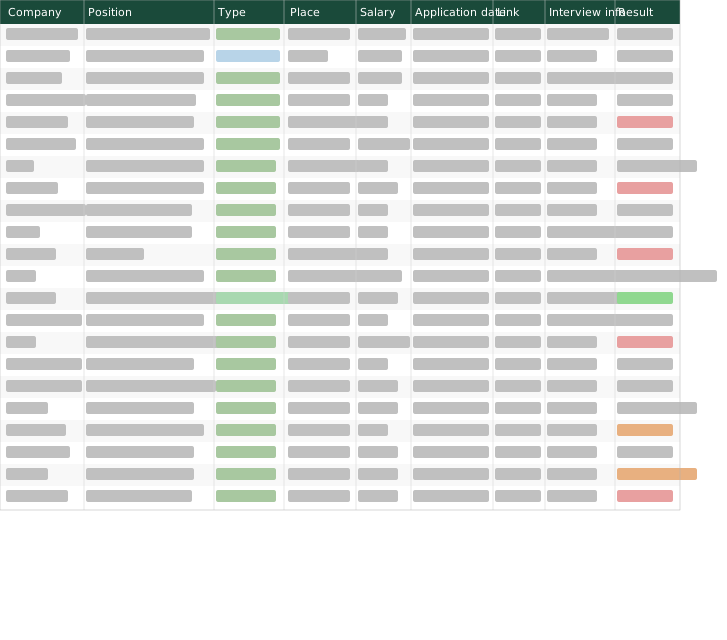
It turned out to be really useful, especially when I needed to reply to companies I was still interviewing with after I got my offer (spoiler alert ;)). It also means I can give you a completely subjective timeline and stats below.
My stats from 10 days of applying
- 19 jobs applied to
- 7 companies never got back to me (still nothing, over a month later)
- 5 immediate (same-day) rejections - usually some variation of "we're not sure you fit" or "we have a high volume of applicants"
- 2 initial / technical calls I attended and then withdrew from before the next stage
- 4 initial calls I was invited to but cancelled eventually after I got my offer
- 1 great offer, which I accepted
The offer itself was pretty much exactly what I'd set out to find: a fully hands-on senior engineer role in a very interesting company. After over two years of mostly managing, that felt like the right landing spot - and a nice closure to the tech-lead-to-IC story I wrote about earlier.
What I'd do differently
A few things I'd tell my past self, if I were starting over.
I'd start the portfolio earlier. Not because anyone explicitly asked for it - most companies didn't - but because building something real in the technologies I wanted to talk about was the single most useful interview prep I did. By the time I was on calls, I had concrete projects to point at, and "let me tell you about a design decision I made" beats "I would probably do X" every time.
I'd also worry less about the LeetCode side, and more about explaining my thinking out loud. The first few mock interviews I ran were a humbling reminder that solving a problem in my head and walking someone through it as I solve it are very different skills. If I were doing it again, I'd start the mocks earlier and do more of them, even on problems I already knew how to solve.
There might also be a longer follow-up coming on the prep itself - the actual week-by-week of the 6-week plan, how I structured the mock interviews with Claude, and what I'd keep or cut. If that's the bit you're most interested in, stay tuned.
The honest assessment
I was a bit stressed by the whole process. I hadn't interviewed in almost 7 years, and I'd never interviewed for a senior role before. Being prepared genuinely helped me boost my confidence.
I also appreciate I might have been very lucky with my particular situation, and that finding a great match this quickly isn't the norm, but I did want to acknowledge that interviewing is like any other skill and it needs training to the build confidence.
If you have any questions, please reach out through my socials or the contact section. And of course, please wish me good luck in my new role. Hoping to write about my initial experience of it soon.
See you in the next post, Ola